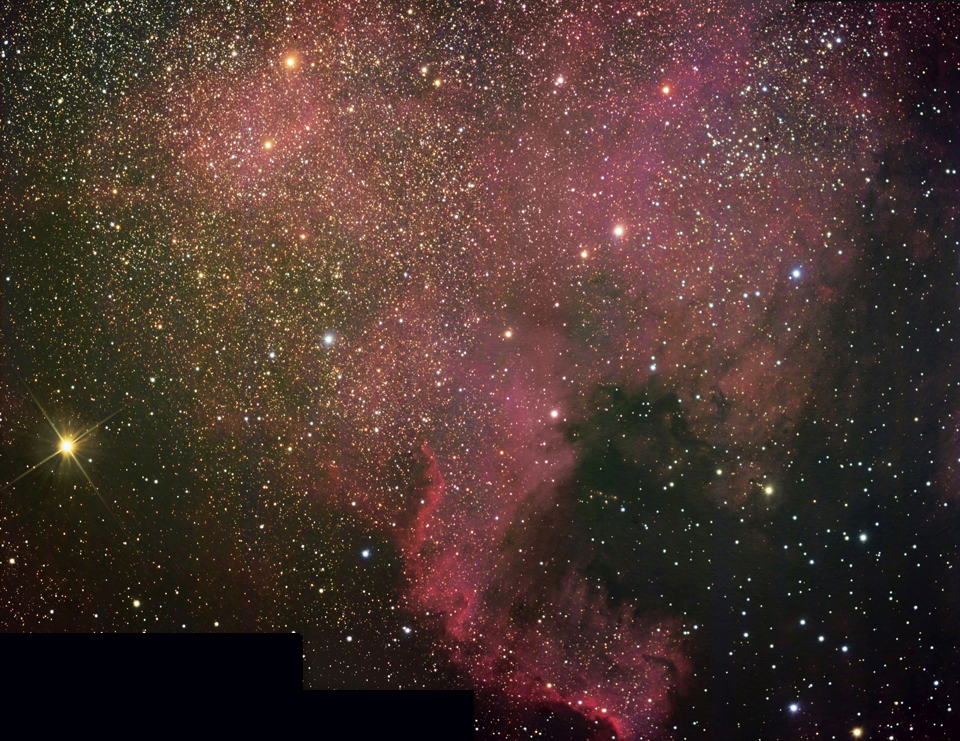
NGC7000
The North America Nebula
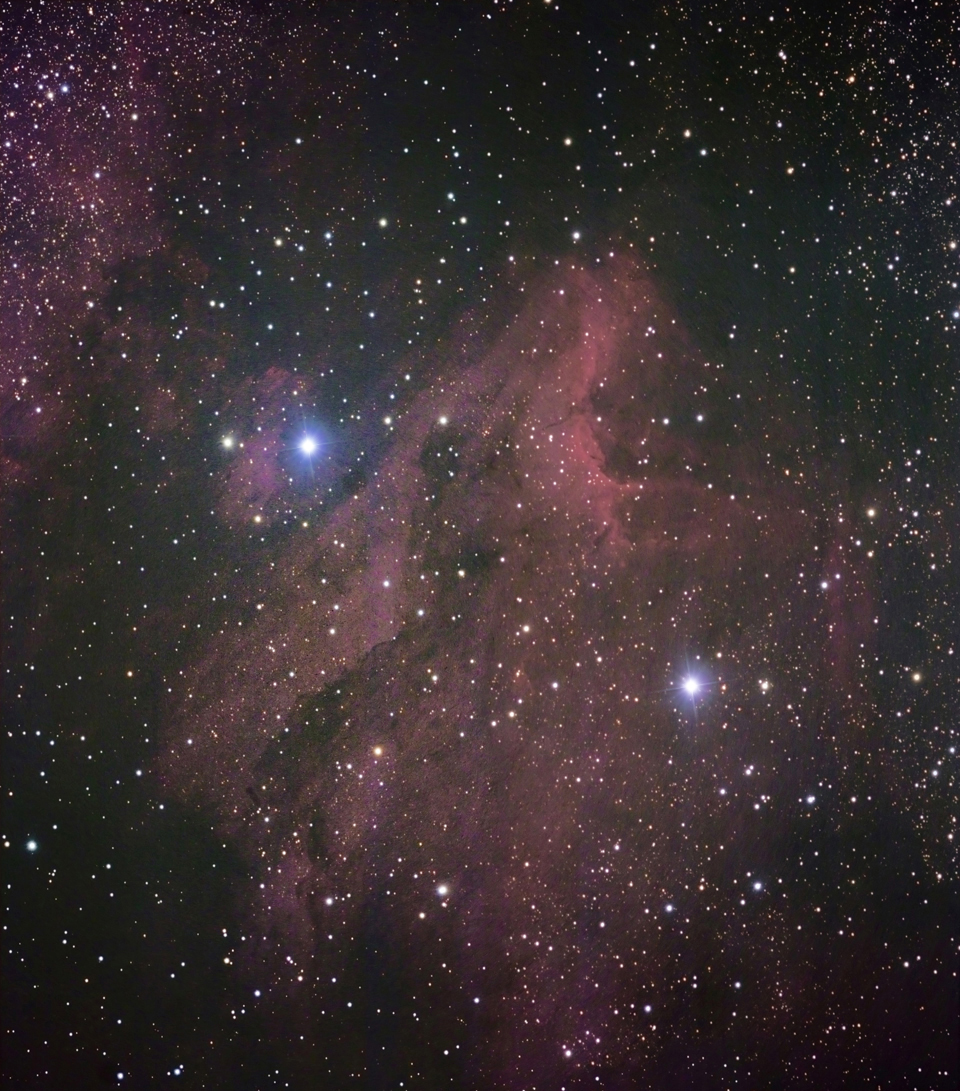
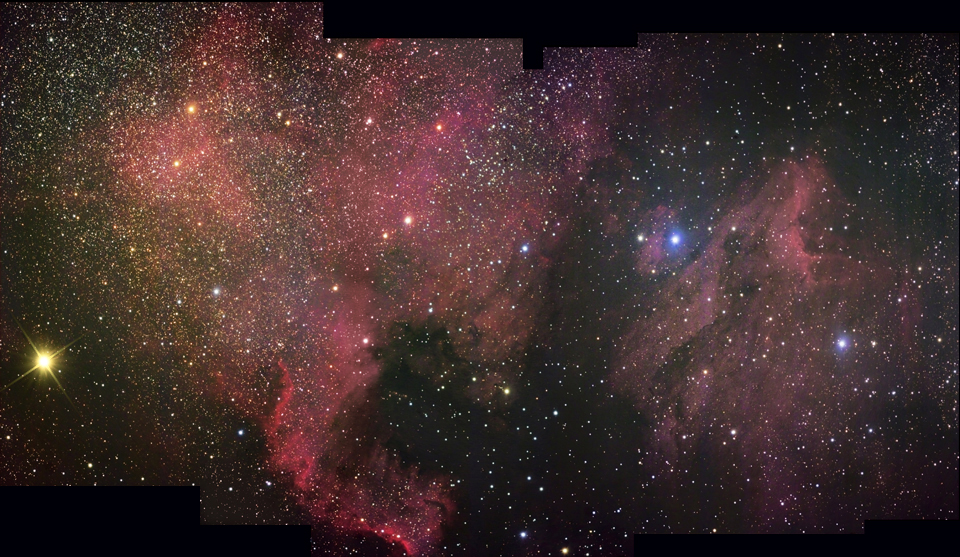
The North America Nebula (NGC 7000 or Caldwell 20) is an emission nebula in the constellation Cygnus, close to Deneb (the tail of the swan and its brightest star). The remarkable shape of the emission nebula resembles that of the continent of North America, complete with a prominent Gulf of Mexico. The Pelican Nebula (also known as IC5070 and IC5067) is an H II region associated with the North America Nebula in the constellation Cygnus. The nebula resembles a pelican in shape, hence the name. The Pelican Nebula is a large area of emission nebula in the constellation Cygnus (the Swan), close to Deneb, and divided from its brighter, larger neighbor, the North America Nebula, by a molecular cloud filled with dark dust. The Pelican is much studied because it has a particularly active mix of star formation and evolving gas clouds. The light from young energetic stars is slowly transforming cold gas to hot and causing an ionization front gradually to advance outward. Particularly dense filaments of cold gas are seen to still remain. Millions of years from now this nebula might no longer be known as the Pelican, as the balance and placement of stars and gas will leave something that appears completely different. http://en.wikipedia.org/wiki/North_America_Nebula http://en.wikipedia.org/wiki/Pelican_Nebula
ABOUT THE IMAGES DATE/TIME: The evening and early mornings of June 23rd -July 1st, 2011. CAMERA: Canon XSI, 450D modified TELESCOPE: Orion 100ED @ F/7.65 MOUNT: Celestron CG-5GT. TOTAL IMAGES: 5, for full mosaic. ISO SETTING: 800 EXPOSURE LENGTH: 300sec. TOTAL IMAGE EXPOSURE LENGTH: 18hrs 45min. SUBTRACTIONS: 10 dark frames and 10 bias frames for each image. CAPTURE: MaximDL STACKING/PRE-PROCESSING: Deep Sky Stacker PROCESSING: Photoshop CS3
|
|---|
| Copyright 2010 All Rights Reserved |
|---|